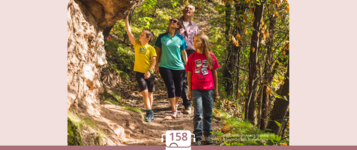

Margarethenbach - Tschintsch at Tschögglberg
Welcome to our place – with Stefan and Maria at the Tschintschhof in Glaning!
Surrounded by meadows, forests, and fresh mountain air, we live and work where nature still dictates its own rhythm. Mindfulness and a deep connection to our farm shape our daily lives.
Our farm is located at an altitude of 1,100 meters in Glaning, an idyllic hamlet in the municipality of Jenesien, high above Bozen. Nestled in a pristine landscape, we manage our farm with great appreciation for nature and in harmony with the seasons.
The Margarethenbach (St. Margaret's brook) flows through the forest right next to our meadows. It originates near the famous earth pyramids of Nobls in Jenesien, flows down to Siebeneich, and finally empties into the Etsch/Adige River. This stream has always held great significance for the local people—for a long time, farmers' grain mills lined its course, harnessing its power. Even today, the foundation walls of these old mills can still be found along the stream.
Our farm is home to cattle, chickens, bees, cats, and recently also fish, all of which contribute in their own way to the lively daily routine and the natural cycle of our farm.
With aquaponics, we create a resource-efficient form of food production - without using synthetic fertilizers or pesticides, with minimal water consumption, we grow fresh fish, vegetables, and herbs.
Aquaponics combines two resource-saving methods:
-
Aquaculture – the controlled rearing of fish
-
Hydroponics – the cultivation of vegetables in water, completely without soil
Together, they form a closed-loop system where fish and plants live in a perfect symbiosis.
Nutrient-rich water is generated in the fish area, which is then processed by natural filters and microorganisms. This water subsequently travels to the greenhouse, supplying the vegetable and herb plants with all the essential nutrients they need for healthy growth.
In turn, the plants enrich the water with oxygen before it flows back into the fish area. This creates a natural cycle where both sides support each other.


 Find accommodation