
 recommended route
Theme trail
· South of South Tyrol
Open
recommended route
Theme trail
· South of South Tyrol
Open
The Dürer path - Hospice San Floriano to the Lago Santo
Südtirols Süden
-
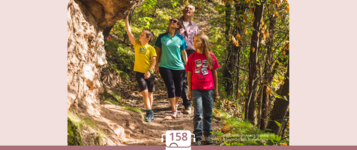
 Ferienregion Südtirols SüdenPhoto: Südtirols Süden
In the centre of Laag, the actual Dürer Trail begins on trail no. 7. Following an old cobbled mule track, the route climbs steadily through mixed woodland. Soon, impressive views open up over the Adige Valley, Fennberg and the southern Mendel Range.
After about an hour, hikers reach the impressive Laukenbach Gorge. Here the trail crosses the so-called Roman Bridge, one of the most distinctive landmarks along the entire Dürer Trail. The route then continues through forests and vineyards up to Buchholz (Pochi), South Tyrol’s highest wine-growing village. The small St. Ursula Church and the sculpture garden are well worth a visit.
From Buchholz, trail no. 8 is followed. The route first passes through chestnut and beech forests before climbing into the Trudner Horn Nature Park. The landscape changes significantly here: vineyards give way to peaceful mountain forests and alpine meadows.
As the elevation increases, the views become ever more expansive. Eventually, hikers reach Sauch Pass and shortly afterwards Sauch Hut, a popular resting place. Historically, this area formed an important connection between the South Tyrolean Lowlands and the Cembra Valley.
From Sauch Hut, the trail continues along the Dürer Trail markings and trail no. 1 towards Lake Santo (Lago Santo). The path winds through shady beech forests and passes the historic Roccolo, a former bird-catching structure.
After a final ascent, the view suddenly opens onto Lake Santo at an altitude of around 1,200 metres. Nestled among forests, this picturesque mountain lake is considered one of the most beautiful places along the Dürer Trail. It is believed that Dürer reached the highest point of his historic mountain route here. The lake is an ideal place for a longer rest before the trail descends into the Cembra Valley.
Author’s recommendation
• The most scenic section of the trail stretches from Buchholz via Sauch Hut to Lake Santo, combining magnificent views, peaceful forests and alpine meadows.
• Spring and autumn are the best seasons for hiking the Dürer Trail. During summer, an early start is recommended, as the lower sections through the vineyards can be quite exposed to the sun.
• Allow enough time to enjoy the Roman Bridge, Sauch Hut and Lake Santo, which are among the highlights of the route.
• Refreshment stops are limited along the trail, so be sure to carry sufficient water and some snacks.
• Lake Santo is an ideal place for a longer break before continuing towards the Cembra Valley.
• Follow the trail markers displaying the “AD” monogram, which identify the historic Dürer Trail.
Take time to experience the landscape through Dürer’s eyes – many of the views along the route have changed very little since his journey in 1494.
Südtirols Süden
Derived from the technical difficulty and the stamina requirements.
Track types
Show elevation profileRest stops
Ristorante Malga SauchSafety information
• Check the weather forecast and trail conditions before setting out.
• In case of thunderstorms, heavy rain or poor visibility, postpone or discontinue the hike.
• Stay on marked trails and follow official trail signs.
• Sure-footedness is required, especially on steep or wet sections.
• Carry sufficient drinking water, as refreshment opportunities along the route are limited.
• Inform family members or friends about your planned itinerary.
• In case of emergency, dial the European emergency number 112.
• Respect nature, grazing animals and local wildlife, and take all litter back with you.
Roadbook
The Dürer Trail begins at the historic Klösterle St. Florian near Laag, a former hostel for pilgrims and merchants travelling along the ancient Alpine route. From here, hikers follow the Dürer Trail markings (AD) through the vineyards and orchards of South Tyrol’s Lowlands to the village of Laag.
In the village centre, the actual Dürer Trail starts on trail no. 7. Following an old cobbled mule track, the route climbs steadily through mixed woodland. Along the way, impressive views open over the Adige Valley, the Salorno Gorge and the surrounding vineyards. The trail continues to the Laukenbach Gorge and crosses the so-called Roman Bridge, one of the most distinctive landmarks of the route.
The ascent then continues to Buchholz (Pochi), South Tyrol’s highest wine-growing village. The small settlement, with its St. Ursula Church and panoramic views, is an ideal place for a short break.
From Buchholz, trail no. 8 leads towards Trudner Horn Nature Park. The landscape gradually changes as vineyards give way to chestnut, beech and conifer forests. The historic route crosses peaceful woodland areas and offers magnificent views of South Tyrol’s Lowlands and the surrounding mountain ranges.
Via Sauch Pass, hikers reach Sauch Hut, a popular resting point along the trail. From there, the route follows the Dürer Trail signs and trail no. 1 towards Lake Santo (Lago Santo). The path winds through shady beech forests and passes the historic Roccolo, a former bird-catching structure.
After a final ascent, hikers arrive at Lake Santo, situated at about 1,200 metres above sea level. Surrounded by forests and tranquil mountain scenery, the lake is considered one of the most beautiful places along the Dürer Trail and offers an ideal resting place before the route continues towards the Cembra Valley and Segonzano.
Route: Klösterle St. Florian – Laag (AD) – trail no. 7 to Buchholz – trail no. 8 to Sauch Hut – trail no. 1 to Lake Santo.
Roccolo del Sauch
Sculpture garden
Dürer Path
Church of Saint Laurentius - Laag / Laghetti
Dürer Path
Sculpture garden
Parish church S. Orsola
Convent S. Floriano
Parish church S. Orsola
ASV Laag Raiffeisen
Klösterle
Klösterle
Hospiz
Klösterle
Ristorante Malga Sauch
Public transport
The starting point of the Dürer Trail at Klösterle St. Florian in Laag can easily be reached by public transport. Regional trains stop at Neumarkt-Tramin (Egna-Termeno) railway station, from where regular bus services operate to Laag/St. Florian. The nearest bus stop is only a short walk from the trailhead.
For the return journey from Lake Santo, public bus services in Trentino are recommended. Connections via Cembra and Trento provide access to the regional rail and bus network.
Up-to-date timetables and connections are available on the websites of südtirolmobil and Trentino Trasporti.
Get Timetable to destination
Directions
The starting point of the Dürer Trail is located at Klösterle St. Florian in Laag (Municipality of Neumarkt/Egna) in South Tyrol’s Lowlands.
By car, Laag can be reached via the A22 Brenner Motorway. Coming from Bolzano or Trento, take the Neumarkt-Auer (Egna-Ora) exit and follow the signs to Laag/St. Florian.
By public transport, travellers can take a regional train to Neumarkt-Tramin (Egna-Termeno) railway station. From there, bus connections are available to Laag. Alternatively, the starting point can also be reached on foot or by bicycle, for example from the train station of Margreid / Magrè.
For the return journey from Lake Santo, the use of public transport from Trentino or a pre-arranged transfer is recommended.
Parking
Public parking spaces are available near Klösterle St. Florian and within the village of Laag. As parking capacity may be limited, especially on weekends and during the peak season, an early arrival is recommended.
Please use designated parking areas only and follow local parking regulations and signage.
Coordinates
Equipment
• Sturdy hiking or trekking boots with good grip
• Weather-appropriate layered clothing
• Rain jacket and sun protection
• Sufficient drinking water and light snacks
• Mobile phone with a fully charged battery
• Hiking map or GPS device
• Personal medication and a small first-aid kit
• Hiking poles if desired, especially for longer descents
Derived from the technical difficulty and the stamina requirements.
Statistics


 Find accommodation